
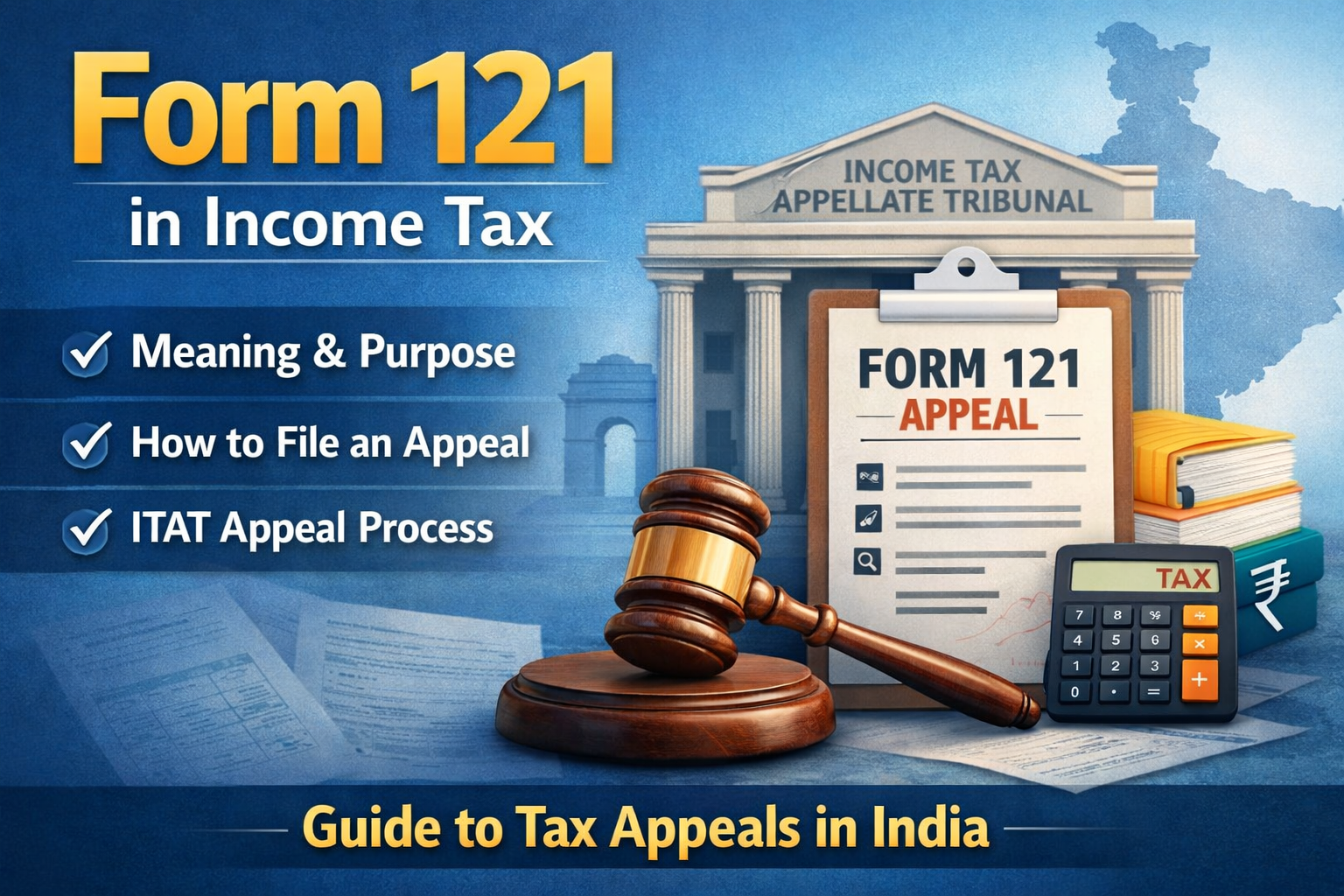
The Indian tax system allows taxpayers to challenge decisions made by tax authorities if they believe the decision is not correct. One important document used for this purpose is Form 121. This form is used to submit an appeal before the Income Tax Appellate Tribunal, which is a higher authority that reviews income tax disputes.
Understanding how Form 121 works can help taxpayers handle disagreements with tax authorities in a proper legal way. In this article, we will explain what Form 121 is, why it is used, and how taxpayers can file an appeal using this form.
What is Form 121?
Form 121 is an official document used to file an appeal before the Income Tax Appellate Tribunal. Taxpayers use this form when they are not satisfied with the decision given by the Commissioner of Income Tax (Appeals).
In simple terms, if a taxpayer believes that the order issued by the Commissioner of Income Tax (Appeals) is not fair or accurate, they can approach the tribunal and request a further review of the case using Form 121.
The tribunal acts as an independent body that examines the facts, documents, and tax rules before giving its judgment.
Why Form 121 is Important
Sometimes taxpayers and tax authorities may have different interpretations of income, deductions, or tax liabilities. In such situations, Form 121 provides a legal path for taxpayers to raise their concerns and seek justice.
The main reasons for using this form include:
- Challenging tax demands that appear incorrect
- Requesting a review of penalties imposed by the tax department
- Addressing disputes related to income assessment
- Ensuring fair interpretation of tax rules
By filing Form 121, taxpayers get an opportunity to present their arguments before a higher authority.
When Should Form 121 Be Filed?
Form 121 is used only after the taxpayer has already appealed to the Commissioner of Income Tax (Appeals) and is still dissatisfied with the outcome.
Some common cases where this form may be used are:
- The taxpayer believes the tax demand is wrongly calculated
- A penalty has been imposed unfairly
- The tax department has added income that the taxpayer believes is incorrect
- There is disagreement about deductions or exemptions
In such cases, the taxpayer can escalate the matter to the Income Tax Appellate Tribunal through Form 121.
Time Limit for Filing the Appeal
Taxpayers must follow the deadline set by the tax rules. The appeal using Form 121 should generally be filed within 60 days from the date the order from the Commissioner of Income Tax (Appeals) is received.
If the appeal is submitted after this period, the taxpayer may need to provide a valid explanation for the delay.
Details Required in Form 121
While filling out the form, the taxpayer must provide accurate information about the dispute. This helps the tribunal understand the case clearly.
The form usually asks for the following information:
- Name and address of the taxpayer
- PAN number
- Assessment year involved in the dispute
- Details of the order passed by the Commissioner of Income Tax (Appeals)
- Amount of tax under dispute
- Reasons for filing the appeal
Providing clear and correct details helps ensure that the appeal process moves smoothly.
Example to Understand Form 121
Imagine that a taxpayer receives a notice demanding an additional tax payment of ₹1,50,000 after an assessment by the tax department. The taxpayer believes the calculation is incorrect and files an appeal before the Commissioner of Income Tax (Appeals).
If the Commissioner confirms the tax demand and the taxpayer still believes the decision is wrong, they can take the case to the Income Tax Appellate Tribunal by filing Form 121.
The tribunal will review the documents and arguments from both sides before making its final decision.
Advantages of Filing an Appeal
Filing an appeal through Form 121 offers several benefits for taxpayers who believe a tax order is incorrect.
Some key advantages include:
- Opportunity for a higher authority to review the case
- Fair hearing for the taxpayer
- Possibility of reducing or cancelling tax demand
- Protection of taxpayer rights under the law
This process ensures that taxpayers have access to justice if they feel an earlier decision was not accurate.
Conclusion
Tax disputes can arise due to differences in interpretation or calculation of taxes. Form 121 provides taxpayers with a proper legal channel to challenge such decisions.
By submitting this form to the Income Tax Appellate Tribunal, individuals and businesses can request a fresh review of their case. Knowing how Form 121 works can help taxpayers deal with tax disputes more confidently and ensure that their concerns are heard by the appropriate authority.