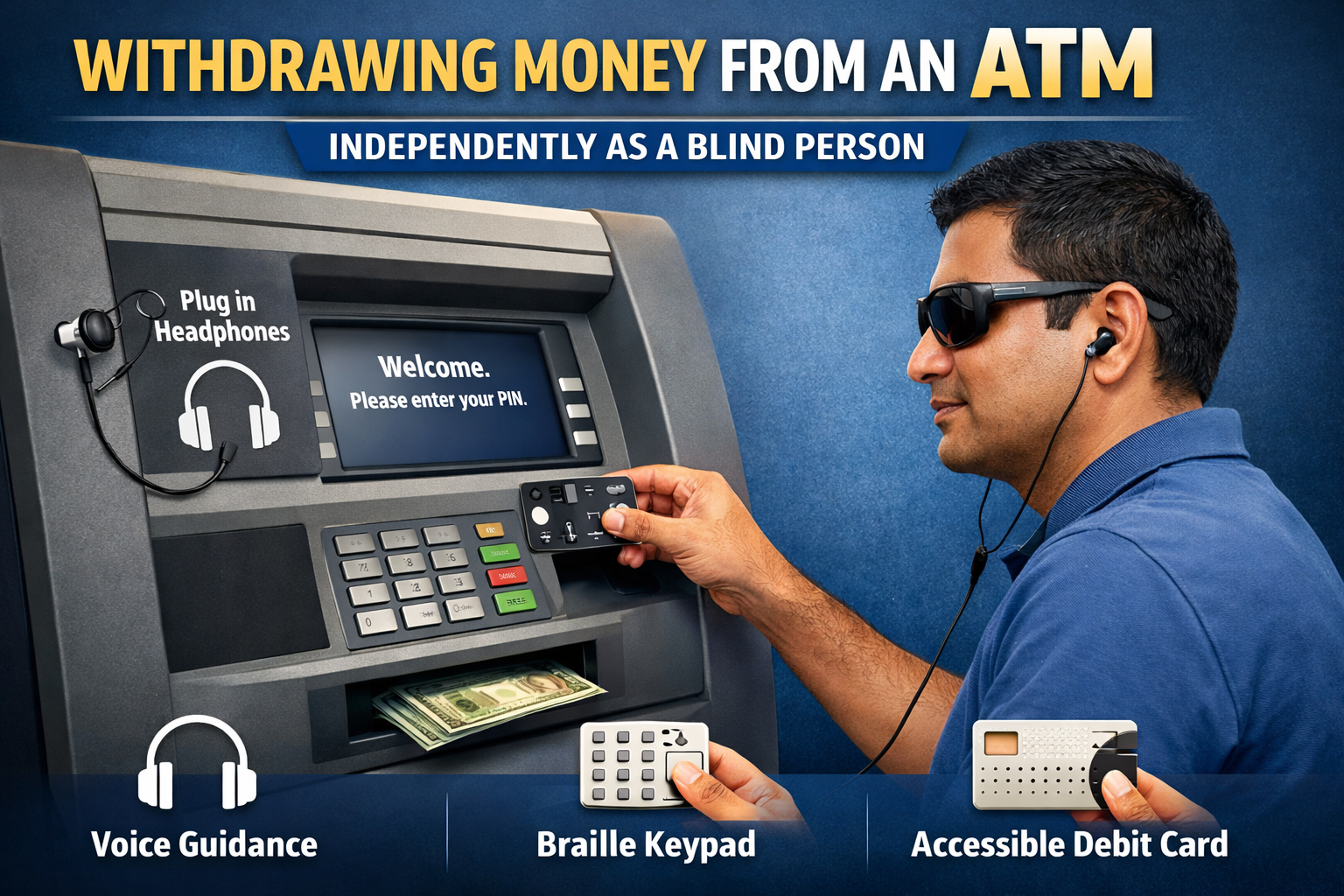
Banking should be accessible to everyone, including people who are visually impaired. With advancements in technology, many ATMs are now designed in a way that allows blind individuals to withdraw money independently, safely, and confidently without depending on others.
This article explains how accessible ATMs work and how a visually impaired person can use them step by step.
Talking ATMs – Voice Guidance System
One of the most helpful innovations is the talking ATM, which provides voice instructions to guide users during the transaction.
When a person inserts their card and connects earphones to the ATM’s audio jack, the machine activates voice mode automatically. The system then gives clear instructions such as entering the PIN, selecting withdrawal options, and confirming the amount.
In India, accessibility features in banking services are encouraged under guidelines from the Reserve Bank of India to ensure equal access for all customers.
Braille and Tactile Keypads
Accessible ATMs usually include special keypad designs that help blind users operate them easily through touch.
These features may include:
Braille markings on number keys
Raised dots or symbols on important buttons like Enter, Cancel, and Clear
Tactile indicators near the card slot and cash dispenser
With practice, users can comfortably navigate the machine without needing to see the screen.
Specially Designed Debit Cards
Some banks provide debit cards with small tactile notches or cut marks. These help visually impaired customers identify the correct direction to insert the card into the ATM.
The card works just like any other debit card but offers better usability for those who cannot rely on visual cues.
Step-by-Step Withdrawal Process
Here is a simple process a blind person can follow:
Insert the debit card into the ATM.
Plug in earphones to activate voice instructions.
Choose the preferred language using the keypad.
Enter the ATM PIN securely.
Select the cash withdrawal option.
Enter the amount to withdraw.
Confirm the transaction.
Collect the cash and receipt from the machine.
The audio system guides the user throughout the process, ensuring privacy and independence.
Benefits of Accessible ATMs
Accessible ATMs provide many important advantages:
No need to share PIN with anyone
Greater independence and confidence
Reduced risk of fraud or misuse
Equal participation in financial services
Organizations such as the National Payments Corporation of India also support inclusive banking infrastructure across the country.
Real-Life Example
For example, a visually impaired government employee used to depend on colleagues to withdraw his salary every month. After learning about voice-enabled ATMs at his bank branch, he started handling his withdrawals independently. This not only improved his confidence but also protected his financial privacy.
Safety Tips for Blind Users
Prefer ATMs located inside bank branches or secure areas.
Never share your PIN with anyone.
Use earphones to keep instructions private.
Count your cash immediately after receiving it.
Contact bank staff if the audio system is not working.
Conclusion
Modern ATM technology has made it possible for visually impaired individuals to manage their money independently. Features like voice guidance, Braille keypads, and tactile cards promote dignity, safety, and financial inclusion. With awareness and proper usage, blind users can perform ATM transactions confidently without anyone’s help.