
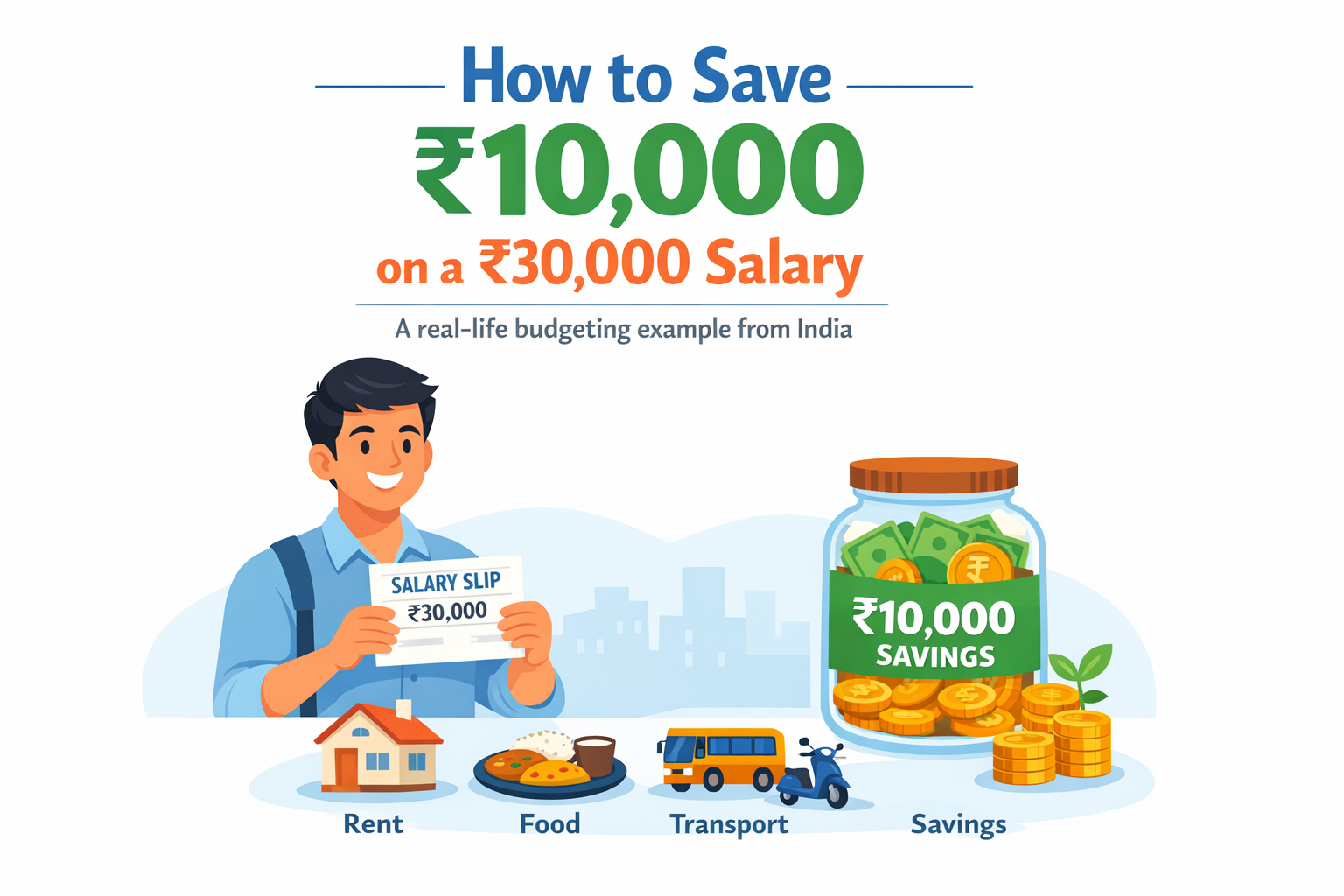
Saving ₹10,000 per month on a ₹30,000 salary may sound difficult, but it is 100% possible with smart planning and discipline. Many salaried people in India believe savings are only for high-income earners—but the truth is, habit matters more than income.
Let’s understand this with a real-life example of a common salaried person and a practical monthly budget.
Real-Life Example: Ramesh, a Private Office Employee
Ramesh is a 28-year-old office executive working in a private company in Guwahati.
His monthly salary is ₹30,000, credited to his bank account after deductions.
Like many middle-class earners, Ramesh lives on rent, travels daily to work, and supports his family partially. Despite this, he successfully saves ₹10,000 every month.
Here’s how he does it.
Step-by-Step Monthly Budget Breakdown
- Fixed Savings First – ₹10,000
Ramesh follows the “Pay Yourself First” rule.
₹5,000 → Recurring Deposit (RD)
₹3,000 → Mutual Fund SIP
₹2,000 → Emergency fund (Savings account)
✅ Total Savings: ₹10,000
He sets auto-debit so the money gets saved as soon as salary is credited.
- Monthly Expenses – ₹20,000
Now let’s see how he manages the remaining ₹20,000.
🏠 Rent – ₹7,000
Shared room accommodation to reduce rent cost.
🍚 Food & Groceries – ₹5,000
Home-cooked meals
Limited outside food (only weekends)
🚍 Travel – ₹2,000
Public transport instead of daily cab
Monthly bus pass
📱 Mobile + Internet – ₹600
Budget prepaid plan with WiFi at home.
💡 Electricity & Utilities – ₹1,200
Controlled electricity usage.
👕 Personal & Miscellaneous – ₹2,200
Clothing
Small outings
Emergency minor expenses
✅ Total Expenses: ₹20,000
Key Habits That Help Him Save ₹10,000 Monthly
- Avoids Lifestyle Inflation
Even after a salary hike, Ramesh doesn’t immediately increase expenses.
- Tracks Every Expense
Uses a simple notes app to record daily spending.
- Limits Online Shopping
No impulse buying during sales unless necessary.
- No Credit Card Debt
Uses UPI or debit card only, spends what he has.
- Fixed Savings Goal
Savings is non-negotiable, not optional.
What Happens in One Year?
If Ramesh saves ₹10,000 every month:
Monthly Saving: ₹10,000
Yearly Saving: ₹1,20,000
Plus returns from SIP & RD
This amount can be used for:
Emergency needs
Higher education
Marriage expenses
Down payment for a bike or home
Final Thoughts
Saving ₹10,000 on a ₹30,000 salary is not about sacrificing happiness—it’s about smart spending and clear priorities. Even small lifestyle changes can create big financial security over time.
If Ramesh can do it, you can too.
Start small, stay consistent, and let your money work for you.