
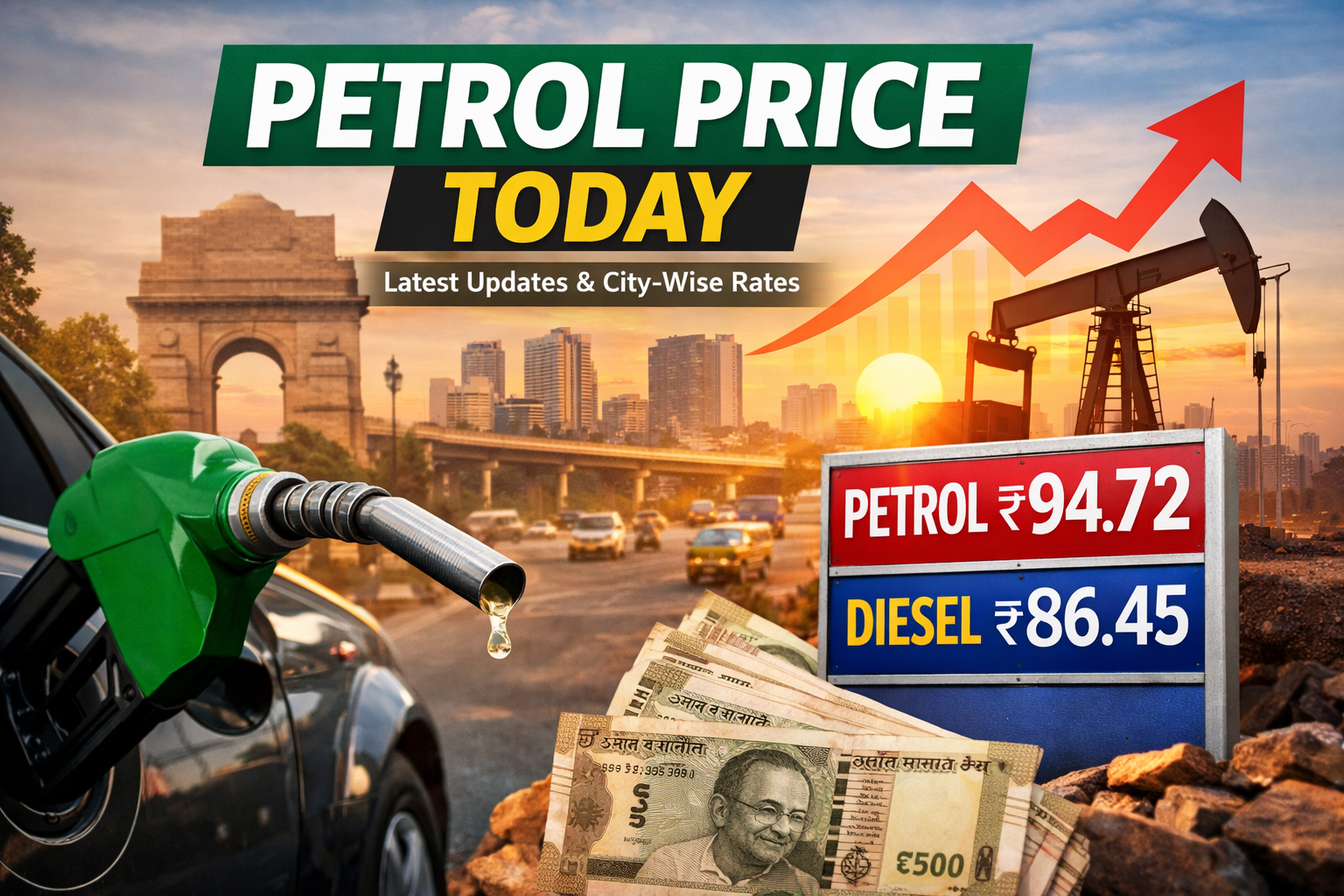
Petrol prices in India are updated regularly and play an important role in the daily lives of millions of people. Since petrol is widely used for transportation, any change in fuel prices directly affects household budgets, travel costs, and the overall economy.
In this article, we will look at the latest petrol prices in major Indian cities, the reasons behind price changes, and how these changes impact common people.
Petrol Price Today in Major Cities of India
| City | Petrol Price (Approx.) |
| New Delhi | ₹94.72 per litre |
| Mumbai | ₹104.21 per litre |
| Chennai | ₹100.75 per litre |
| Kolkata | ₹103.94 per litre |
| Guwahati | ₹96.01 per litre |
| Bengaluru | ₹102.86 per litre |
| Hyderabad | ₹107.41 per litre |
| Ahmedabad | ₹94.49 per litre |
| Jaipur | ₹104.88 per litre |
| Lucknow | ₹94.65 per litre |
Note: Petrol prices may vary slightly due to daily revisions.
Why Petrol Prices Change in India
Petrol prices do not remain the same for long. Several factors influence the final price that consumers pay at petrol pumps.
International Crude Oil Prices
India imports a large portion of its crude oil from other countries. When global crude oil prices rise, the cost of producing petrol also increases. As a result, petrol prices in India tend to go up.
Government Taxes
A significant portion of the petrol price includes taxes imposed by both the central and state governments. These taxes differ from one state to another, which is why petrol prices are not the same across all cities.
Currency Exchange Rate
Crude oil is purchased in US dollars in the international market. When the value of the Indian rupee weakens against the US dollar, the cost of importing crude oil increases, which can lead to higher petrol prices.
Transportation and Dealer Costs
The cost of transporting petrol from refineries to fuel stations and the commission given to petrol pump dealers also contribute to the final price.
How Petrol Prices Are Revised
Fuel prices in India are revised on a daily basis. Oil marketing companies review global crude oil prices and currency exchange rates before adjusting petrol and diesel prices. This system helps keep domestic fuel prices aligned with international market trends.
Impact of Petrol Price Increase
An increase in petrol prices can have several effects on everyday life and the economy.
- Transportation costs increase for individuals and businesses
- Prices of goods and services may rise due to higher logistics costs
- Household monthly expenses may go up
- Inflation in the economy may increase
Even a small rise in petrol prices can affect people who travel daily for work or business.
Tips to Save Fuel and Reduce Expenses
Although petrol prices are beyond the control of consumers, there are some practical ways to reduce fuel consumption.
- Maintain proper tyre pressure in vehicles
- Avoid aggressive acceleration and sudden braking
- Turn off the engine during long stops
- Use public transportation when possible
- Keep the vehicle well-maintained for better fuel efficiency
These simple habits can help save fuel and reduce monthly expenses.
Future Outlook for Petrol Prices
The future trend of petrol prices in India largely depends on global crude oil markets and economic conditions. If international oil prices remain stable, petrol prices may also remain steady. However, global conflicts, supply disruptions, or major economic changes can lead to fluctuations in fuel prices.
Experts believe that monitoring international oil markets and government policies will give a better understanding of how petrol prices may move in the future.
Conclusion
Petrol prices in India are influenced by global crude oil rates, government taxes, and currency exchange rates. Since prices are revised regularly, consumers need to stay updated about the latest petrol rates in their cities.
Understanding how petrol prices work can help individuals plan their transportation expenses more efficiently and make better financial decisions.